A New Covenant of Unity as Ogun Muslims Align for Leadership and Development
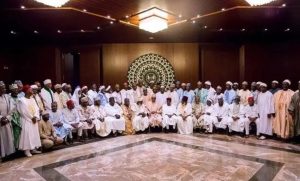
A constellation of eminent personalities converged for a historic group photograph at the maiden edition of the Ogun State Muslim Assembly. Among those present were the Deputy Governor of Ogun State, Her Excellency Engr. Noimot Salako-Oyedele, FNSE; former Governor of Ogun State, His Excellency Senator Ibikunle Amosun, CON, FCA; the Baba Adinni of Ogun State, Ambassador Sarafa Tunji Isola, OFR; the Iya Adinni of Ogun State, Alhaja Salmot Makanjuola Badru; His Royal Majesty, Alayeluwa Oba (Prof.) Saka Adelola Matemilola, Oluyalo Otileta VII, the Olowu of Owu Kingdom; Senator Shuaib Afolabi Salisu, FNCS; Prof. Abdulafeez Oladosu; the Aare Adinni of Ogun State, Senator Abdulrahman Olamilekan Mustapha, CON; the Grand Chief Imams of Yewaland, Ijebuland, Egbaland, and Remoland; alongside numerous other distinguished guests, marking a moment of unity and significance in the annals of Ogun State’s Muslim community.

History was gently but firmly rewritten in Abeokuta on Tuesday, January 27, 2026, as Ogun State Muslims converged for their first-ever General Assembly—a landmark convergence that many now describe as a spiritual awakening, a moral reckoning, and a strategic rebirth for the Ummah. Convened by the League of Imams and Alfas, Ogun State, and powered by the Council of Muslim Titled Chiefs (COMTIC) under the visionary chairmanship of Ambassador Sarafa Tunji Isola OFR, the gathering stood as a solemn declaration that the era of fragmentation must give way to unity, purpose, and institution-building.
Under the deeply symbolic theme, “Synergy, Leadership and Development in the Muslim Ummah of Ogun State,” over 500 Islamic scholars, clerics, traditional rulers, academics, politicians, professionals, and community leaders assembled not merely to speak, but to search their souls, interrogate their realities, and recommit to a shared future. It was a convergence that transcended titles and sects, reminding all present that the Ummah’s greatest strength lies not in numbers alone, but in cohesion, discipline, and collective vision.
Speaking through his representative, Prof. Abdulafeez Oladosu, the Registrar of JAMB, Prof. Ishaq Oloyede, posed a question that hung heavily in the air like a moral mirror: “Why are Imams in Ogun State not united?” The question was not an indictment but an invitation—an appeal for introspection and repentance from habits of division that have weakened Islamic influence and diluted moral authority. His prayer that the assembly would mark the beginning of a new era of greatness resonated deeply with the spirit of the gathering.

Declaring the assembly open, Ogun State Deputy Governor, Engr. Noimot Salako-Oyedele, delivered a message that bridged faith and governance, reminding participants that spirituality without structure cannot deliver development. Drawing compelling analogies from business and politics, she stressed that leadership—religious or otherwise—must be inclusive, participatory, and rooted in community ownership. She warned that when leaders speak to people rather than with them, the resulting gap becomes dangerous, weakening institutions and stalling progress. Her reflections on stalled religious projects and thriving faith-based universities reinforced a central lesson: organised constituencies command attention, influence policy, and attract sustainable development.
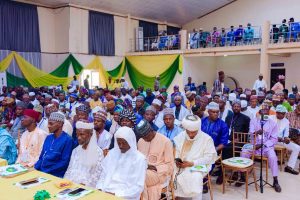
Former Governor of Ogun State and Father of the Day, Senator Ibikunle Amosun, echoed this sentiment by lamenting how internal divisions and sectarian differences have over time projected the Muslim Ummah as fragmented rather than united. He urged Muslims to rise above affiliations, return to the shared wisdom of the Qur’an, and rediscover unity as both a religious obligation and a strategic necessity. According to him, only a united Ummah can raise leaders who embody Islamic values while promoting peace, justice, and socio-economic advancement.

Earlier, the Secretary-General of the League of Imams and Alfas, Ogun State, Sheikh Imam Tajudeen Adewunmi, framed the assembly as a deliberate response to stark realities confronting Muslims—educational decline, healthcare challenges, economic disempowerment, social injustice, and weak socio-political integration. He described the gathering as a structured platform for honest engagement, leadership renewal, and sustainable development, noting that the diverse composition of participants affirmed a shared belief that progress demands collective responsibility. His appreciation of Governor Dapo Abiodun’s inclusive engagement with religious bodies and the Federal Government’s resolution of the ASUU crisis further underscored the centrality of education to both faith and nation-building.

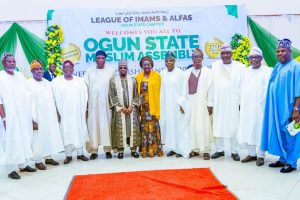
Towering prominently over the entire discourse was the unifying message of Ambassador Sarafa Tunji Isola OFR—erstwhile Nigeria’s High Commissioner to the United Kingdom, former Minister of Mines and Steel Development, former Secretary to the Ogun State Government, Baba Adinni of Ogun State, Baba Adinni of Yorubaland, Edo and Delta States, and Chairman of COMTIC. In his intervention, Ambassador Isola spoke not as a politician or diplomat alone, but as a bridge-builder shaped by decades of public service, religious stewardship, and intercultural engagement. He emphasised that unity is not optional for Muslims; it is existential. According to him, harmony among religious groups—especially Muslims—creates tolerance, strengthens social cohesion, and ultimately benefits society at large. He reminded the gathering that the essence of coming together to pray, deliberate, and plan is to rediscover unity as an act of worship and a pathway to relevance.
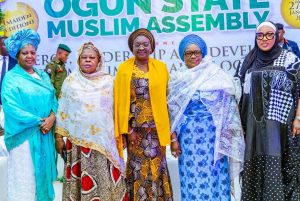
This message found scholarly reinforcement in the keynote address delivered by Emeritus Prof. Kamaldeen Balogun, Chief Imam of Gbagura and Mufti of Egbaland, who offered a sweeping diagnosis of the Ummah’s challenges, tracing them to internal negligence, leadership gaps, educational deficits, economic marginalisation, and justice disengagement. Drawing from Qur’anic injunctions and historical context, he stressed that renewal must begin from within and move deliberately from reaction to structured planning. His proposals for institutional synergy, development blueprints, zakat-driven education, economic cooperatives, youth and women inclusion, and accountability aligned seamlessly with Ambassador Isola’s long-standing advocacy for institution-building over personal influence.
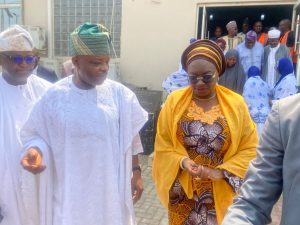
As voices like Senator Shuaib Salisu and other dignitaries added their support to the call for unity and collective action, the assembly increasingly revealed itself not as a ceremonial event, but as a moral covenant—an agreement among generations to heal old wounds, rebuild trust, and reposition Islam as a force for justice, development, and social harmony in Ogun State.
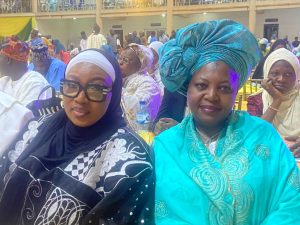
With the presence of respected royal fathers, legislators, former state and national officials, Islamic leaders from across Yorubaland, academics, captains of industry, and media practitioners, the assembly closed on a note of cautious optimism. Many now see it as a potential turning point, capable of translating sincere prayers and profound speeches into concrete actions.
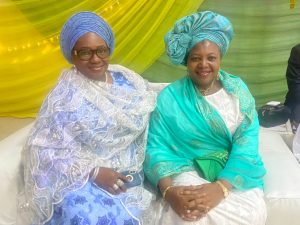
In conclusion, the assembly mirrored a message: that faith must be organised, leadership must be inclusive, and unity must be intentional. If the spirit of “ABEOKUTA 2026” endures beyond that historic day, Muslims in Ogun State may well be on the path not only to internal cohesion, but to renewed synergy, leadership, and development.